
Travel guide
What to pack for Japan: the complete checklist
Packing for Japan is mostly like packing for any city trip, with a few twists: a plug adapter for most Europeans, shoes that slip off easily, a small towel, some cash, and a careful look at your medicines, because some common ones are banned. You can also pack lighter than you think, thanks to convenience stores everywhere and luggage delivery between hotels. This checklist covers the essentials, what to add for each season, and what to leave at home.


In short
- Japan uses Type A plugs at 100 V: US two-pin plugs fit, European ones need an adapter.
- Check your medicines: Adderall is banned, and Sudafed-type cold medicine needs permission.
- Bring slip-on shoes and good socks; you will take your shoes off often.
- Pack a foldable tote bag; shops charge for plastic bags.
- Travel light: send big bags ahead with luggage delivery.
In this guide
The essentials
- Passport, valid for your whole stay, plus a printed or saved copy of your booking. Check entry rules in our visa-free entry guide.
- Payment cards and some cash. Cards work in most places, but carry cash for small shops, rural buses and some ticket machines (JNTO (opens in a new tab)). See money in Japan.
- Phone, charger and adapter, with an eSIM set up before you fly. Zwitchy (zwitchy.io (opens in a new tab)) is our eSIM of choice; see our eSIM guide.
- Power bank, in your carry-on only. Japanese airlines allow two of 160 Wh or less, and you may not charge them on board (JAL (opens in a new tab)).
- Travel insurance details, and the medicines you need with your prescriptions.
- Comfortable walking shoes. You will walk far more than at home.

Plugs and voltage
Japan runs on 100 volts AC everywhere, at 50 Hz in the east (Tokyo) and 60 Hz in the west, including Nagoya, Kyoto and Osaka (JNTO (opens in a new tab)). Outlets take Type A plugs with two flat pins.
- From the US and Canada: two-pin plugs fit. Three-pin plugs need a cheap adapter, as many Japanese outlets have no earth hole.
- From Europe and the UK: you need a Type A adapter for every device.
- Voltage: phone and laptop chargers labelled 100–240 V work fine. Dual-voltage hair dryers, irons and shavers work too, but single-voltage European appliances need a step-down transformer (JNTO (opens in a new tab)). Most hotels provide hair dryers.
- Forgot something? Adapters and transformers are easy to buy in Akihabara in Tokyo, Nipponbashi in Osaka, or at Yodobashi Camera and Bic Camera (JNTO (opens in a new tab)). New shinkansen have outlets at the window seats (JNTO (opens in a new tab)).
Medicines: check before you pack
This is the one area where a packing mistake can cause real trouble. Without any paperwork, you may bring up to one month's supply of prescription medicine and up to two months' supply of other medicines and disposable contact lenses. For more, you need an import confirmation before you leave home (MHLW (opens in a new tab)).
Some medicines that are normal in the US or Europe are controlled in Japan. Medicines containing amphetamine, such as Adderall, cannot be brought in at all, even with a prescription. Medicines with pseudoephedrine (common in cold remedies such as Sudafed) or lisdexamfetamine (Vyvanse) need advance permission, and narcotics such as codeine, oxycodone and morphine need a permit that you should apply for at least 14 days before you travel (MHLW (opens in a new tab)). Check every medicine on the official list before you go, carry it in its original packaging, and bring a copy of your prescription.
Clothes and shoes
Japanese people dress neatly but casually, and there is no strict dress code for tourists. A few things are worth packing on purpose:
- Shoes you can slip off. You will take them off at ryokan, some restaurants, temples and fitting rooms (JNTO (opens in a new tab)). Laces you have to retie every time get old fast.
- Socks without holes, for the same reason.
- Layers. Trains, shops and hotels are air-conditioned in summer and heated in winter.
- A modest outfit for temples and good restaurants; shoulders covered is a safe default.
- Swimwear only for pools and beaches: onsen are bathed in naked; see our onsen guide.

What to add for each season
| Season | Add to your bag |
|---|---|
| Spring (March to May) | Light jacket for chilly evenings under the cherry blossoms, a picnic sheet |
| Rainy season (June) | Compact umbrella, quick-dry clothes, shoes that cope with puddles |
| Summer (July, August) | Breathable clothes, hat, sunscreen, a small towel for sweat, refillable water bottle |
| Autumn (September to November) | Layers for cold mornings and evenings while chasing the autumn leaves |
| Winter (December to February) | Warm coat, thermals, gloves and shoes with grip; snow can fall even in Tokyo (JNTO (opens in a new tab)). See our winter guide. |
Check the forecast for Tokyo, Osaka or Sapporo the week before you go.

Small things that make a big difference
- A foldable tote bag. Most shops charge for plastic bags (JNTO (opens in a new tab)).
- A small hand towel or handkerchief. Many public toilets have hand dryers or nothing at all.
- A coin purse. You will collect a lot of ¥100 and ¥10 coins.
- A small bag for trash, as public bins are rare; see our etiquette guide.
- An IC card on your phone for trains and convenience stores; see our IC card guide.
Pack light: let your bags travel separately
Big suitcases are hard work on crowded trains and station stairs, and some shinkansen need a reservation for oversized luggage (JNTO (opens in a new tab)); see our shinkansen guide. Japan's "Hands-Free Travel" services can deliver your bags from the airport to your hotel, between hotels, or from a convenience store, often the next day (JNTO (opens in a new tab)). For a few hours, coin lockers at most stations cost about ¥300 to ¥600 (JNTO (opens in a new tab)).

Japan's intense commitment to customer service offers your luggage to be safely transported and stored allowing you to travel hands-free.
What you can leave at home
- Lots of toiletries. Hotels usually provide shampoo, soap, toothbrushes and slippers, and drugstores and convenience stores sell the rest.
- A big umbrella. Convenience stores sell cheap ones everywhere.
- Too many clothes. Coin laundries and hotel washers are common, so plan to wash once a week.
- Your hair straightener, if it is single-voltage; it will not work properly on 100 V.
Ready to go? Read our flights guide and arrival day guide next.
Questions travellers ask
What plug type does Japan use?
Type A, with two flat pins, at 100 volts. US two-pin plugs fit; European and UK plugs need an adapter.
Can I bring my medicine to Japan?
Usually, up to one month's supply of prescription medicine and two months' of other medicine without paperwork. But some medicines are banned or need permission, including Adderall, pseudoephedrine cold medicine and codeine. Check the Ministry of Health's rules first.
Do I need a voltage converter in Japan?
Not for phone and laptop chargers labelled 100–240 V. Single-voltage appliances from Europe need a step-down transformer.
What should I wear in Japan?
Neat, casual clothes and shoes you can slip off easily. Cover your shoulders for temples, and dress in layers for air-conditioning and heating.
Can I send my luggage ahead in Japan?
Yes. Hands-Free Travel counters at airports, most hotels and many convenience stores can deliver your bags to your next hotel.
Sources
We checked the facts on this page against these sources.
- Ministry of Health, Labour and Welfare厚生労働省Bringing medicines into Japan (opens in a new tab)
- Narcotics Control Department (MHLW)厚生労働省 麻薬取締部Medicines with controlled ingredients (opens in a new tab)
- Japan National Tourism Organization (JNTO)日本政府観光局Plugs and electricity (opens in a new tab)
- Japan National Tourism Organization (JNTO)日本政府観光局Luggage delivery and coin lockers (opens in a new tab)
- Japan National Tourism Organization (JNTO)日本政府観光局Japanese customs and etiquette (opens in a new tab)
- Japan Airlines (JAL)日本航空Power bank rules from April 2026 (opens in a new tab)
- Zwitchy eSIMJapan eSIM plans and prices (opens in a new tab)
- Japan National Tourism Organization (JNTO)日本政府観光局Japan in February (opens in a new tab)
Explore related pages
Read next

Cherry blossom season in Japan: when and where to see sakura
Cherry blossom season is Japan's most famous, and its most fleeting: in any one city, the trees go from first flowers to full bloom in about a week, and petals start to fall soon after. The good news is that the blossoms sweep across the country for more than a month, from Kyushu in late March to Hokkaido in May. This guide gives the average dates for 14 cities from the Japan Meteorological Agency, explains how much they move from year to year, and shows how to plan a trip that gives you the best odds.23 Oct 2026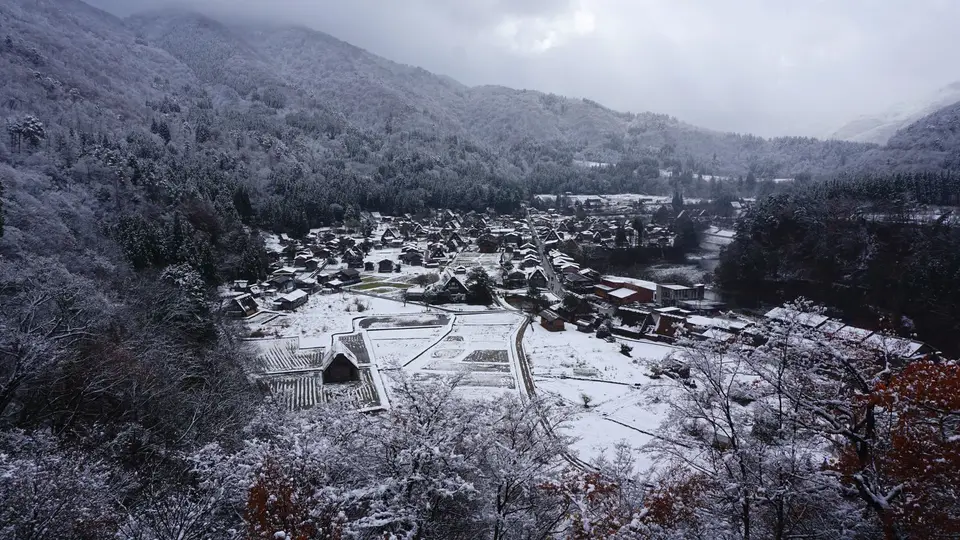
Japan in winter: snow, skiing, festivals and hot springs
Winter is Japan's most underrated season. The Pacific side, Tokyo included, is dry and sunny, while the Sea of Japan side and Hokkaido get some of the deepest snow on Earth. That means world-class powder skiing, snow festivals, thatched villages under white blankets, and the best onsen weather of the year, often at lower prices than in spring or autumn. This guide covers where to find snow, when to go, what to wear and the few weeks to avoid.23 Oct 2026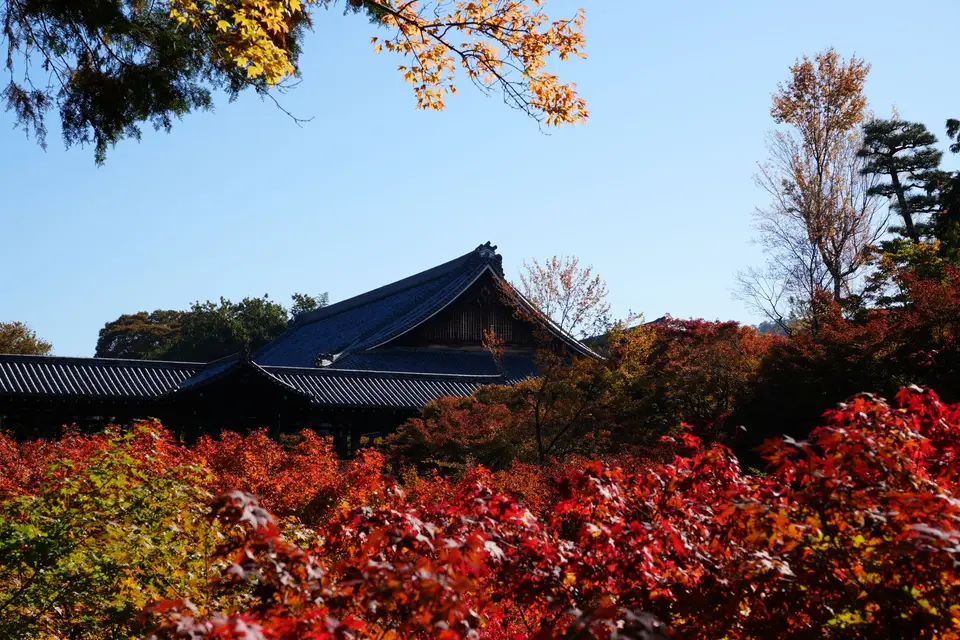
Autumn leaves in Japan: when and where to see koyo
Autumn may be the best season of all to visit Japan. The air is clear, days are mild, food is at its best, and from the mountains of Hokkaido in late September to the temple gardens of Kyoto in early December, the leaves turn red, orange and gold. Japanese call it koyo. This guide gives the Japan Meteorological Agency's average dates for maples and ginkgo in 12 cities, explains why the mountains come first, and suggests where to go week by week.23 Oct 2026


