
Travel guide
Japan in winter: snow, skiing, festivals and hot springs
Winter is Japan's most underrated season. The Pacific side, Tokyo included, is dry and sunny, while the Sea of Japan side and Hokkaido get some of the deepest snow on Earth. That means world-class powder skiing, snow festivals, thatched villages under white blankets, and the best onsen weather of the year, often at lower prices than in spring or autumn. This guide covers where to find snow, when to go, what to wear and the few weeks to avoid.


In short
- For reliable snow, head to Hokkaido, Nagano, Niigata or Tohoku; Tokyo itself is usually dry and sunny.
- Ski season runs roughly December to April; January and February have the most consistent snow.
- Avoid New Year if you can: prices rise and many businesses close for days.
- The Sapporo Snow Festival runs 4–11 February 2027; book hotels months ahead.
- Wear shoes with grip and dress in layers; buildings and trains are warm inside.
In this guide
Two winters in one country
Japan gets some of the highest snowfall in the world, thanks to cold winds blowing over the Sea of Japan (JNTO (opens in a new tab)). Those winds drop their snow on the western side of the mountains, on Hokkaido, Tohoku and the coast from Niigata to Kanazawa, and leave the Pacific side clear. In January, Sapporo averages −0.4°C by day and −6.4°C at night, while Tokyo averages 9.8°C and 1.2°C (JMA (opens in a new tab)). Snow in Tokyo, Osaka or Hiroshima is uncommon, but it happens (JNTO (opens in a new tab)).
| Where | What winter is like |
|---|---|
| Hokkaido | Deep, dry powder snow from December; cold, with festivals and ski resorts |
| Tohoku | Heavy snow, onsen towns and family-friendly ski areas |
| Niigata, Nagano, Gunma | Big ski areas, some within a day trip of Tokyo |
| Tokyo, Kyoto, Osaka | Mostly dry and sunny, cold mornings, rare snow |
| Okinawa | Mild, around 20°C, with cherry blossoms from mid-January |
Check live forecasts on our weather pages for Sapporo, Asahikawa, Niigata, Nagano, Tokyo and Naha.

Skiing and snowboarding
The ski season generally runs from December to April, depending on the resort. Hokkaido and the high mountains of Nagano get snow earliest. January and February have the most consistent snowfall, March can still bring big dumps but more warm spells, and Christmas, New Year and early February are the busiest weeks on the slopes (JNTO (opens in a new tab)).
- Niseko, Hokkaido: the largest and most developed resort, beginner friendly and the easiest for English speakers, with views of Mount Yotei (JNTO (opens in a new tab)).
- Hakuba, Nagano: host of the 1998 Winter Olympics, with ten resorts and a wide range of terrain and accommodation; most resorts are not connected (JNTO (opens in a new tab)).
- Tohoku: family-friendly resorts with beginner and intermediate runs (JNTO (opens in a new tab)).
- Niigata, Nagano and Gunma: many options, some close enough to Tokyo for a day trip (JNTO (opens in a new tab)). A JR Pass can cover the shinkansen.
- Lesser-known resorts often have good deals on lift passes and fewer crowds (JNTO (opens in a new tab)).


Snow festivals and winter lights
The Sapporo Snow Festival is the biggest winter event in Japan, with ice and snow sculptures at several venues and over 2 million visitors a year (JNTO (opens in a new tab)). The 2027 festival runs from 4 to 11 February (Sapporo Snow Festival (opens in a new tab)); book accommodation early. In Akita, the Yokote Kamakura Festival lights up snow huts with candles (JNTO (opens in a new tab)). From around November to January, cities put on illuminations and light displays (JNTO (opens in a new tab)).

Snowy onsen and villages
Winter is the best time for a hot spring. Onsen towns such as Ginzan in Yamagata welcome many visitors in January (JNTO (opens in a new tab)), and a soak in an outdoor bath while snow falls is one of Japan's great experiences. Read our onsen guide for how it works, and browse our onsen collection for places to stay. The thatched farmhouses of Shirakawa-go in Gifu and the old streets of Kanazawa in Ishikawa are at their most magical under snow.

If all else fails, submerging yourself in the naturally heated waters of a hot spring resort is a time-honored way to keep warm.
December, January or February?
- [December](season:december): ski resorts open, cities sparkle with lights and early December is calm. From late December, New Year takes over.
- [January](season:january): cold, dry and the best month for powder. Around New Year, prices are higher, many businesses close for several days and bookings are hard to get (JNTO (opens in a new tab), JNTO (opens in a new tab)); from mid-January it is quieter.
- [February](season:february): deep snow, the Sapporo Snow Festival and good ski conditions most of the month (JNTO (opens in a new tab)). In Okinawa, cherry blossoms are already out (JNTO (opens in a new tab)); Naha's open on 16 January on average (JMA (opens in a new tab)), see our cherry blossom guide.
What to wear and expect
- Layers. Thermal underwear, a fleece and a warm, waterproof coat for the snow country; trains, shops and hotels are well heated, so you will take layers off indoors.
- Shoes with grip. Pavements get icy in the north, and even in cities snow can fall, so wear sensible walking shoes (JNTO (opens in a new tab)).
- Short days. It gets dark early in winter, so plan outdoor sights for the morning.
- Delays. Heavy snow can delay flights and close mountain roads. Leave slack in your plans on travel days, especially in Hokkaido.
- Ski gear can be rented at most resorts, so you do not need to fly with it.
Questions travellers ask
Where can I see snow in Japan?
Hokkaido, Tohoku, Niigata, Nagano and the Sea of Japan coast get heavy snow. Tokyo is usually dry and sunny, with snow only occasionally.
When is ski season in Japan?
Generally December to April. January and February have the most consistent snow.
When is the Sapporo Snow Festival 2027?
4 to 11 February 2027. Book accommodation well ahead.
Is it very cold in Tokyo in winter?
Mild compared with the north. In January, Tokyo averages 9.8°C by day and 1.2°C at night, with mostly dry, sunny weather.
Is Japan expensive at New Year?
Yes. Prices are higher, bookings are harder, and many businesses close for several days. Early December or mid-January to February is better value.
Sources
We checked the facts on this page against these sources.
- Japan Meteorological Agency気象庁Climate normals (JMA)(in Japanese) (opens in a new tab)
- Japan Meteorological Agency気象庁Cherry blossom flowering dates (JMA)(in Japanese) (opens in a new tab)
- Japan National Tourism Organization (JNTO)日本政府観光局Skiing in Japan (opens in a new tab)
- Japan National Tourism Organization (JNTO)日本政府観光局Japan in January (opens in a new tab)
- Japan National Tourism Organization (JNTO)日本政府観光局Japan in February (opens in a new tab)
- Sapporo Snow Festival official siteさっぽろ雪まつりSapporo Snow Festival (opens in a new tab)
- Japan National Tourism Organization (JNTO)日本政府観光局Business hours and holidays (opens in a new tab)
- Japan National Tourism Organization (JNTO)日本政府観光局How to best enjoy Japan's onsen (opens in a new tab)
Explore related pages
- PrefectureHokkaido
- PrefectureNagano
- PrefectureNiigata
- PrefectureGunma
- PrefectureYamagata
- PrefectureAkita
- PrefectureGifu
- PrefectureIshikawa
- PrefectureOkinawa
- PrefectureTokyo
- PrefectureKyoto
- RegionHokkaido
- RegionTohoku
- RegionChubu
- ThemeNature
- SeasonJapan in December
- SeasonJapan in January
- SeasonJapan in February
- WeatherSapporo
- WeatherAsahikawa
- WeatherNiigata
- WeatherNagano
- WeatherTokyo
- WeatherNaha
Read next

Cherry blossom season in Japan: when and where to see sakura
Cherry blossom season is Japan's most famous, and its most fleeting: in any one city, the trees go from first flowers to full bloom in about a week, and petals start to fall soon after. The good news is that the blossoms sweep across the country for more than a month, from Kyushu in late March to Hokkaido in May. This guide gives the average dates for 14 cities from the Japan Meteorological Agency, explains how much they move from year to year, and shows how to plan a trip that gives you the best odds.23 Oct 2026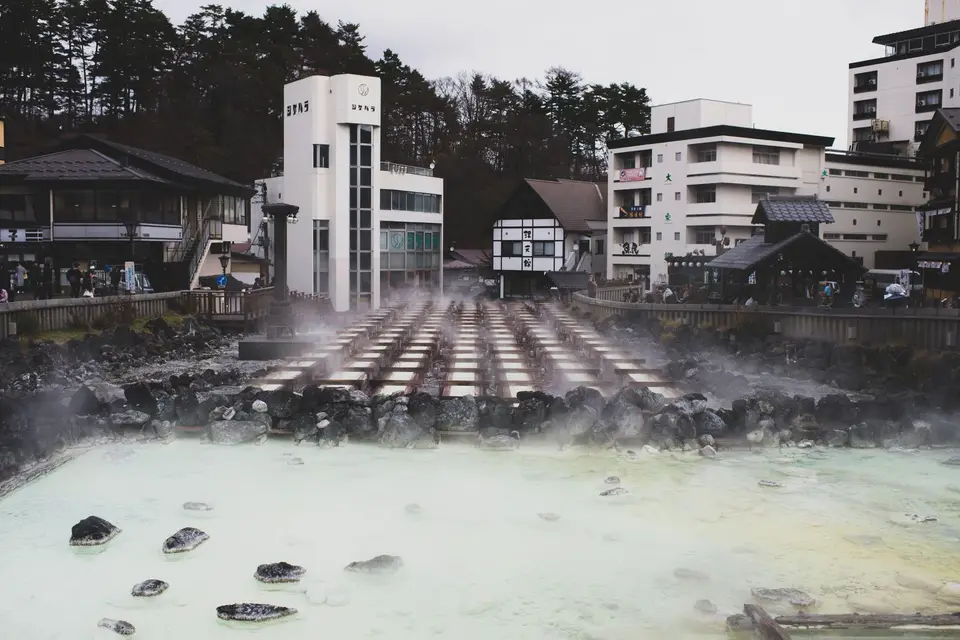
Onsen in Japan: a first-timer's guide to hot springs, etiquette and tattoos
A soak in an onsen is one of the best things you can do in Japan, and also the one that makes first-timers most nervous. You bathe naked, with strangers, after a careful wash, and the rules are not posted in English everywhere. The good news: there are only a few, and they all make sense. This guide walks you through a visit from the front desk to the bath, explains the tattoo question honestly, and points you to onsen towns worth building a trip around.23 Oct 2026
Flights to Japan: which airport to fly into, and what to know before you land
Getting to Japan from the US or Europe is a long-haul flight, so the choices you make when booking shape the first and last day of your trip. This guide compares the main airports, explains why flying into Tokyo and home from Osaka often works best, flags the holiday weeks when flights and trains fill up, and covers the rules that changed recently: power banks on board and the ¥3,000 departure tax.23 Oct 2026


