
Travel guide
Onsen in Japan: a first-timer's guide to hot springs, etiquette and tattoos
A soak in an onsen is one of the best things you can do in Japan, and also the one that makes first-timers most nervous. You bathe naked, with strangers, after a careful wash, and the rules are not posted in English everywhere. The good news: there are only a few, and they all make sense. This guide walks you through a visit from the front desk to the bath, explains the tattoo question honestly, and points you to onsen towns worth building a trip around.


In short
- No swimsuit. Onsen are enjoyed naked; changing rooms are separate for men and women.
- Wash first, sitting at the shower station, and rinse off every bit of soap.
- The small towel never goes in the water: rest it on your head or the edge.
- Tattoos? Look for tattoo-friendly baths or book a private bath (kashikiriburo).
- Take it slow: pour hot water over yourself first, and get out if you feel dizzy.
In this guide
What an onsen is
Onsen are hot springs and the baths built around them. Japan sits on the Pacific Ring of Fire and has over 27,000 natural hot water sources (JNTO (opens in a new tab)), and the water changes from place to place, from milky and cloudy to clear and fizzy (JNTO (opens in a new tab)). You will also meet “sento”, neighbourhood public baths heated without a hot spring, which follow the same rules.
Look for the hiragana character ゆ (yu, hot water) or the bath-and-steam symbol ♨ on signs. Inside, 女 means women and 男 means men (JNTO (opens in a new tab)). Changing rooms are always separate by gender, and so are the vast majority of baths (JNTO (opens in a new tab)).

Your first visit, step by step

- At the entrance, take off your shoes and put them in a locker. Pay at the desk or buy a ticket from the machine; towels are often for rent.
- In the changing room, undress completely and leave everything, swimwear included, in a locker or basket. You may carry the small towel to cover yourself (JNTO (opens in a new tab)).
- Wash before you soak. Sit on a stool at a washing station and use the soap and shampoo, rinse off completely and remove any make-up (JNTO (opens in a new tab)).
- Pour hot water over your body before getting in. This is called “kakeyu”, and it helps you adjust to the heat and avoid a sudden rise in blood pressure (JNTO (opens in a new tab)).
- Into the bath. Fold the small towel on your head or put it on the side, and tie up long hair: neither goes in the water (JNTO (opens in a new tab)).
- Relax quietly. Speak softly, leave your phone outside the bathing area, and do not swim or splash (JNTO (opens in a new tab)).
- Afterwards, dry off with the small towel before you walk back into the changing room, and return rental towels to staff or the collection point (JNTO (opens in a new tab)).
Don't be overly concerned about following all the onsen norms and customs at first. Just review these guidelines, take a deep breath, and enjoy.
Onsen and tattoos
This is the question most visitors from the US and Europe ask. Many onsen and sento still turn away guests with tattoos, a taboo that comes from tattoos' association with organised crime in Japan (JNTO (opens in a new tab)). It is changing: in a 2015 Japan Tourism Agency study, about 30 percent of hotels and inns said they would let someone with a tattoo use their communal baths, and others accept small tattoos covered by a bandage or wrap (JNTO (opens in a new tab)).
- Check before you go. Policies differ, so ask the facility in advance (JNTO (opens in a new tab)).
- Cover sheets work only for very small tattoos (JNTO (opens in a new tab)).
- Private baths (kashikiriburo), booked by the hour, or a ryokan room with its own open-air bath, sidestep the issue completely (JNTO (opens in a new tab)).
Kinds of baths
| Type | What it is |
|---|---|
| Rotenburo | Open-air bath, often with garden, river or mountain views |
| Day-use onsen | Pay once and soak, no overnight stay needed; found in many cities |
| Ryokan onsen | Baths at a traditional inn, often with a private in-room bath |
| Kashikiriburo | Private bath you rent for a set time, for couples, families or anyone shy |
| Sento | Neighbourhood public bath, not fed by a hot spring |
| Foot bath and sand bath | No undressing for foot baths; some towns offer hot sand baths |
Types are described by JNTO (JNTO (opens in a new tab), JNTO (opens in a new tab)). For the full experience, stay at a ryokan: most are built around their baths, and many luxurious ones have a private onsen in the room (JNTO (opens in a new tab)).

Onsen towns worth the trip
An onsen town, a whole village built around its springs and inns, is the best way to try it. JNTO singles out Ginzan in Yamagata as ideal for an authentic onsen experience (JNTO (opens in a new tab)). Other famous names include Beppu in Oita, Kusatsu in Gunma, Hakone in Kanagawa, an easy trip from Tokyo, and Kurokawa in Kumamoto. Browse our onsen collection for the main hot springs across Japan, region by region.

Winter is the classic season: soaking outdoors while snow falls is hard to beat, so look at our January and February pages. In Nagano, even the monkeys know it.

New to Japan? Read our etiquette guide for the rest of the basics, and add a ryokan night to your first trip; our budget guide shows what a ryokan with dinner and breakfast costs.
Questions travellers ask
Do you have to be naked in an onsen?
Yes. Swimwear and clothing stay in the changing room. You can cover yourself with a small towel while walking, but it does not go in the water.
Can I go to an onsen with tattoos?
Sometimes. Many baths still refuse tattoos, but more accept them, some allow small covered tattoos, and private baths (kashikiriburo) or a ryokan room with its own bath avoid the issue. Check with the facility first.
Are onsen mixed?
Changing rooms are always separate for men and women, and the vast majority of baths are too.
What do I bring to an onsen?
Nothing is required. Many baths rent or sell towels and provide soap and shampoo. Bring a hair tie if you have long hair.
What is the difference between an onsen and a sento?
An onsen uses natural hot spring water; a sento is a public bath with heated water. The etiquette is the same.
Can I take photos in an onsen?
No. Leave your phone outside the bathing area.
Sources
We checked the facts on this page against these sources.
- Japan National Tourism Organization (JNTO)日本政府観光局How to best enjoy Japan's onsen (opens in a new tab)
- Japan National Tourism Organization (JNTO)日本政府観光局Hot springs in Japan (opens in a new tab)
- Japan National Tourism Organization (JNTO)日本政府観光局Onsen and tattoos (opens in a new tab)
- Japan National Tourism Organization (JNTO)日本政府観光局Japanese customs and etiquette (opens in a new tab)
- Japan National Tourism Organization (JNTO)日本政府観光局Travelling mindfully in Japan (opens in a new tab)
Explore related pages
Read next
Japanese etiquette for first-timers: the rules that actually matter
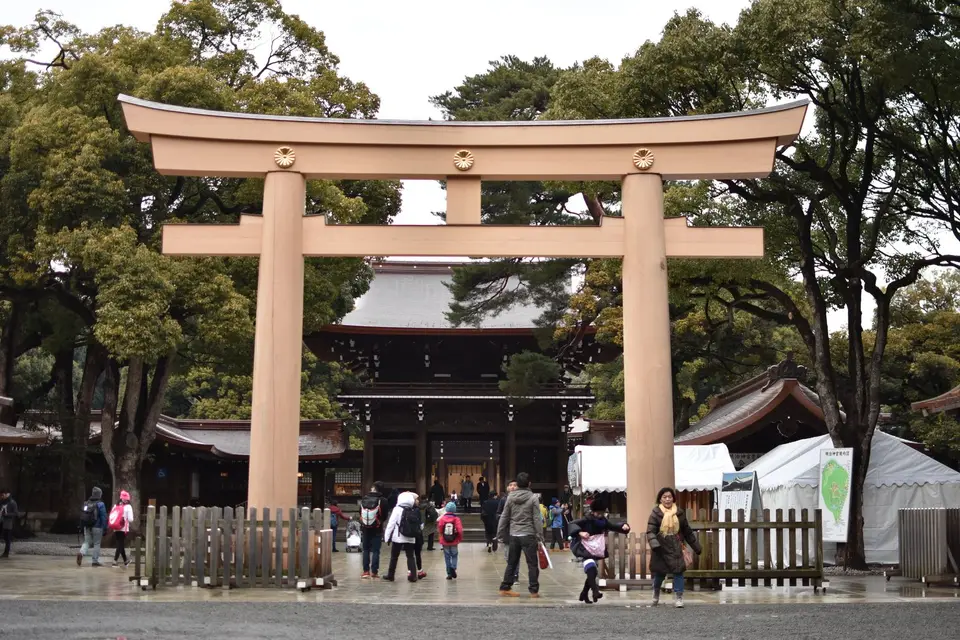
Nobody expects a visitor to know every Japanese custom, and people are forgiving of honest mistakes. But a handful of habits make a real difference: how you behave on trains, when to take your shoes off, how to visit a shrine, and why you will not find a bin on the street. Most of it comes down to one idea, not inconveniencing others. This guide explains the rules that matter, the reasons behind them and the few mistakes worth avoiding.23 Oct 2026
How much does a trip to Japan cost? A budget, item by item
Japan has a reputation for being expensive, but day to day it is often cheaper than London, Paris or New York: a great bowl of ramen costs less than a sandwich at home, and city transport is cheap. The big costs are your flight, where you sleep and any long-distance trains. This guide lists typical prices from JNTO, builds three sample daily budgets, adds up the one-off costs, and shares the tricks that make a real difference.23 Oct 2026
First trip to Japan: a 7-day Tokyo, Kyoto and Osaka itinerary
If this is your first time in Japan, this is the route most people fall in love with: Tokyo's neighbourhoods, the shinkansen to Kyoto's temples, a morning with the deer in Nara and a last night eating in Osaka. This plan gives you seven realistic days, with travel times from official sources, where to stay, which ticket to buy, and the small tricks that save time, such as flying into Tokyo and out of Osaka.23 Oct 2026


